
Why Access to Cervical Screening Matters in Regional Communities
Understanding barriers, breaking them down, and getting screened
Featuring Berry Jones, Women’s Health Nurse | Cervical Cancer Awareness Month
In Australia, cervical cancer is one of the most preventable cancers. Regular screening can detect changes in the cervix before they become cancer or catch cancer early when it’s most treatable. Yet in regional communities like ours, screening rates remain lower than in cities, and the consequences are real: higher rates of diagnosis and death from a disease that doesn’t have to be deadly.
Berry Jones, a Women’s Health Nurse of 35 plus years at the Women’s Health Centre in Coffs Harbour, hears a common question from people moving to our region: “Where are all the services?” It’s a question that highlights a reality – those providing women’s health services to our entire community, not just certain portions, are under stress and doing exceptional work with limited resources.
As we reflect on Cervical Cancer Awareness Month, we’re exploring the barriers that prevent people in our region from accessing cervical screening, and most importantly, the solutions that are making a real difference.
What Is Cervical Screening?
Cervical screening (also called a Cervical Screening Test or CST) is a simple test that checks the health of your cervix. The cervix is the lower part of the uterus that connects to the vagina.
The test looks for a common virus called HPV (human papillomavirus). HPV is very common – most people who have been sexually active will get it at some point in their lives. Usually, the body clears the virus on its own. But sometimes, certain types of HPV stick around and can cause changes to the cells of the cervix. Over time, these changes can develop into cervical cancer.
The screening test finds HPV before any cell changes happen or catches changes early. When found early, these changes are much easier to treat and can prevent cancer from developing.
Who Needs Screening?
Cervical screening is recommended for anyone with a cervix, aged 25 to 74, who has ever been sexually active. You should have a test every five years, even if you feel healthy and have no symptoms.
Two Ways to Test
Since July 2022, you have a choice in how you get screened:
Healthcare provider-collected test: Your doctor or nurse takes a sample from your cervix using a small brush. This is done during a brief examination.
Self-collection test: You take a vaginal swab yourself in private. It’s simple, takes just a few minutes, and is just as accurate at detecting HPV. This option has been a game-changer for many people who found the examination uncomfortable or difficult to access.
| Quick Facts• Over 800 people are diagnosed with cervical cancer in Australia each year, and more than 200 die from it• Over 70% of cervical cancer deaths occur in people who have never been screened or don’t screen regularly• Screening every 5 years significantly reduces your risk of developing cervical cancer• Both collection methods are equally accurate at detecting HPV |
The Barriers We Face in Regional Communities

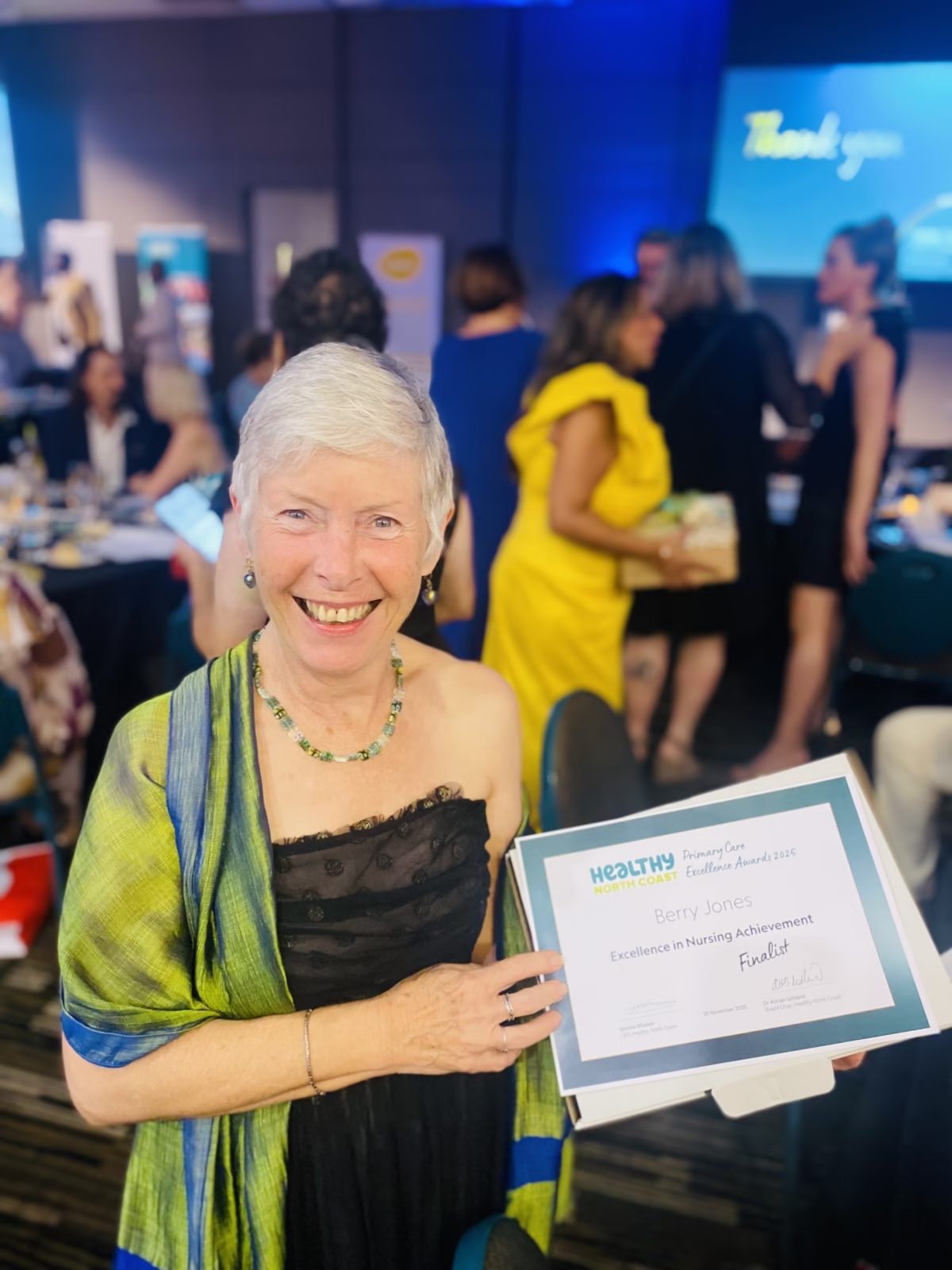
Berry Jones, Women’s Health Nurse of 35 plus years and recently nominated for an International Women’s Day award, sees firsthand the challenges that prevent people in regional areas from getting screened. These barriers are interconnected and significant.
Education Gaps
One of the most fundamental barriers is lack of education – and not just for patients.
“We are now 10 years since we’ve been doing cervical screening, and many Doctors are still calling it a Pap test,” Berry explains. “It’s very hard to get women more educated if even the GP is calling it by the wrong name.”
Many people aren’t aware that:
- Screening is now every five years, not every two years
- The test has changed – it’s now an HPV test, not a Pap test
- Self-collection is now available as an option
- Screening is needed even if you feel healthy or haven’t been sexually active recently
- Screening & self-collection should be simple, fast and effective in identifying any risk of HPV
Education is particularly lacking for teenagers and young people about HPV, cervical health, and the importance of screening once they reach 25.
“Every appointment that I have with a woman is a half-hour appointment – about 20 minutes of that is education,” Berry says. “If I got a dollar for every woman who said, ‘Now, why hasn’t anybody told me that before?’ Whether I’m explaining her anatomy, cervical screening or her menstrual cycle, I would be rich. Giving women this information means they are empowered to make the decisions that are right for them.”
Concerns Over the Process and Past Trauma
For many people, the physical examination itself is a significant barrier. Berry has heard countless stories that explain why.
“The number of stories that I have been told by women about horrific experiences with “Pap tests”, or the incorrect use of speculums is just unbelievable – enough to actually put women off coming,” Berry shares. “I have women who have said they had to previously take Valium in order to have a Pap Test’”.
Women have described bleeding afterwards, excruciating pain, and experiences where they felt their dignity wasn’t respected. For trauma survivors or people with disabilities, the examination can pose additional challenges.
These experiences create lasting fear and avoidance that no amount of health promotion can overcome if the underlying experience doesn’t change.
Berry’s response to this is simple, “Go to an appointment and know that you are quite within your rights to leave if you don’t feel confident or comfortable. Come to the Women’s Health Centre – we will be nice to you.”
Access to Services – Especially Bulk Billing
In regional areas, finding accessible, affordable cervical screening services can be challenging. While the initial screening test can be bulk-billed through many GPs and services like the Women’s Health Centre, not all providers offer this option.
Other access barriers include:
- Distance to healthcare providers
- Limited appointment availability
- Difficulty taking time off work
- Childcare arrangements
- Transport challenges
- Limited options for female healthcare providers
These practical barriers add up, making a simple screening appointment feel impossible to fit into busy lives.
Costs Associated with Treatment of HPV 16/18
Perhaps the most shocking barrier Berry describes is the cost of follow-up care for people who test positive for high-risk HPV types 16 or 18 – the types most likely to lead to cervical cancer.
“If you have HPV 16 or 18, you are supposed to have a colposcopy every year – that costs between $250 and $450 out of your pocket,” Berry explains. “When there are disadvantaged patients, refugees and pensioners with HPV 16 or 18, they often have to defy the health regulations because they can’t afford it.”
Access to publicly funded colposcopy is extremely limited. Coffs Harbour only recently established a clinic at the hospital where colposcopies can be done under Medicare, with just seven appointments available per week for the entire region.
This cost barrier means that people at highest risk – those with HPV 16 or 18 – may not be able to access the monitoring and treatment they need to prevent cancer from developing.
| The Impact of These Barriers• Only 67% of people in rural and remote communities participate in cervical screening• Regional communities have higher rates of cervical cancer diagnosis and death• Aboriginal and Torres Strait Islander peoples are twice as likely to be diagnosed and nearly four times more likely to die from cervical cancer |
The Game-Changer: Self-Collection
After 35 years of working in women’s health, Berry has seen countless strategies to improve screening rates. But nothing has worked like self-collection.
“Self-collect has worked better than all the other strategies that we have ever come up with in the whole 35 years that I have had,” Berry says.
Since July 2022, all eligible people in Australia can choose to do a self-collected cervical screening test. Instead of a healthcare provider using a speculum to collect a sample from the cervix, you collect a vaginal sample yourself using a simple swab.
“When women realise that they can walk in and do a self-collect in privacy, with confidence that it’s going to be a good result – they come,” Berry explains.
The process is remarkably simple. “The first thing I say to women is, ‘Have you done a COVID test?’ I say, ‘This is just like a COVID test that you don’t put the swab in your nose.’ That says everything – it is that simple.”
Self-collection addresses multiple barriers at once: it eliminates concerns about the physical examination, provides privacy and control, and can be done during telehealth appointments, reducing travel needs.
At this point in time, Berry recommends conducting a Self-Collection test under the instruction of a qualified nurse or medical practitioner, but she anticipates this will change in the future as more education and success parameters and instructions for the tests are implemented.
| What to Expect: Self-Collection Step by Step 1. Talk to your healthcare provider about self-collection (in person, by phone, or via telehealth) 2. You’ll receive a self-collection kit and be provided with simple instructions 3. At the clinic or in a private space, use the vaginal swab provided — it takes just 2-3 minutes 4. Return the sample to your healthcare provider (they’ll tell you how) 5. Your sample is sent to a lab for testing 6. Results come back in 2-3 weeks The self-collected sample is just as accurate as a healthcare provider-collected sample for detecting HPV. |
Berry’s Advice: What You Need to Know
If You’ve Been Avoiding Screening
“Try a self-collect, try a self-collect, try a self-collect,” Berry urges. “Find somebody that you can be confident in and just have this done, because unlike a COVID test and COVID these days, it’s not a virus that is just annoying to have, it’s a virus that can kill you.”
If You’ve Had a Bad Experience
You’re not alone, and your experience was not okay. Self-collection offers a trauma-informed alternative that puts you in control. You don’t have to repeat an experience that hurt you or made you feel unsafe.
If Cost Is a Barrier
The initial cervical screening test can be bulk-billed at many providers, including the Women’s Health Centre. If you need follow-up care and cost is an issue, talk to your healthcare provider about options. The system isn’t perfect, but there may be pathways available.
How to Access Cervical Screening Locally
Getting screened has never been easier. Here are your options:
Women’s Health Centre, Coffs Harbour
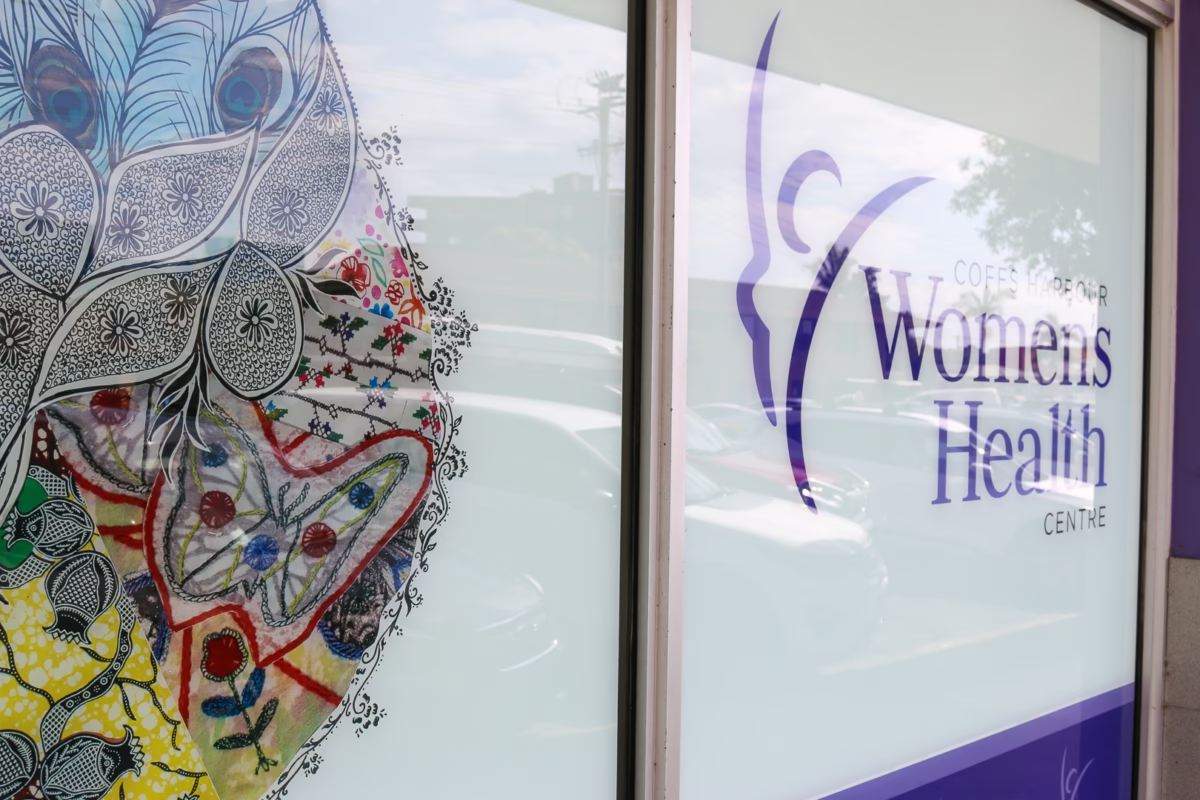
The Women’s Health Centre provides cervical screening with both provider-collected and self-collection options. The team offers a supportive, trauma-informed approach in a welcoming environment.
Contact: 53 Little St, Coffs Harbour New South Wales 2450 ·
(02) 6652 8111
W: Coffs Women’s Health Centre – Health Voyage
insta: ch_womens_health_centre
Appointments available for clinic visits, outreach services, and telehealth consultations. Bulk billing available.
Your Regular GP
Your local GP can provide cervical screening, including self-collection. If you have a regular doctor you’re comfortable with, book an appointment and discuss which option works best for you. Ask about bulk billing when you book.
Trusted Resources and Information
If you have questions, want to learn more, or need additional support, these trusted resources can help:
Family Planning NSW
Phone: 1300 658 886
Website: www.fpnsw.org.au
Comprehensive sexual and reproductive health information and services, including cervical screening.
Jean Hailes for Women’s Health
Phone: 1800 532 642 (Jean Hailes Women’s Health Helpline)
Website: www.jeanhailes.org.au
Evidence-based health information for women, including detailed cervical screening resources.
National Cervical Screening Program
Website: www.health.gov.au/cervical-screening
Official program information about cervical screening, HPV, and what to expect. Available in multiple languages.
National Cancer Screening Register
Phone: 1800 627 701
Website: www.ncsr.gov.au
Check when your next screen is due, update your contact details, and access your results.
Don’t Wait Until It’s Too Late
Cervical cancer is preventable. With regular screening, we can detect changes early and prevent cancer from developing. But screening only works if people can access it.
Berry’s message is clear and born from personal experience: “I lost a really good friend about four years ago because she died of cervical cancer – because she wouldn’t have Pap tests or cervical screens. Even when she started bleeding, she didn’t do anything.”
The barriers are real – the education gaps, the trauma, the limited access, the costs. But so are the solutions. Self-collection has changed the game. Services like the Women’s Health Centre are providing trauma-informed, supportive care. And the screening test itself is more accurate than ever.
If you’re due for screening, or if you’ve been putting it off because of barriers you face, now is the time to reach out. The options have never been more accessible. Your health matters.
| Ready to Get Screened?Women’s Health Centre, Coffs HarbourContact: https://healthvoyage.org.au/service/coffs-harbour-womens-health-centre/womens-health-screening/Call to make an appointment: 02 6652 8111We offer self-collection, provider-collected tests, and trauma-informed care. |
This article was produced for Cervical Cancer Awareness Month (January 2026). Berry Jones is a Women’s Health Nurse at the Women’s Health Centre in Coffs Harbour and was recently nominated for an International Women’s Day award in recognition of her outstanding contribution to women’s health in our region.
Health Voyage is the proud Lead Agency for the Coffs Harbour Women’s Health Centre.