
Time to read:
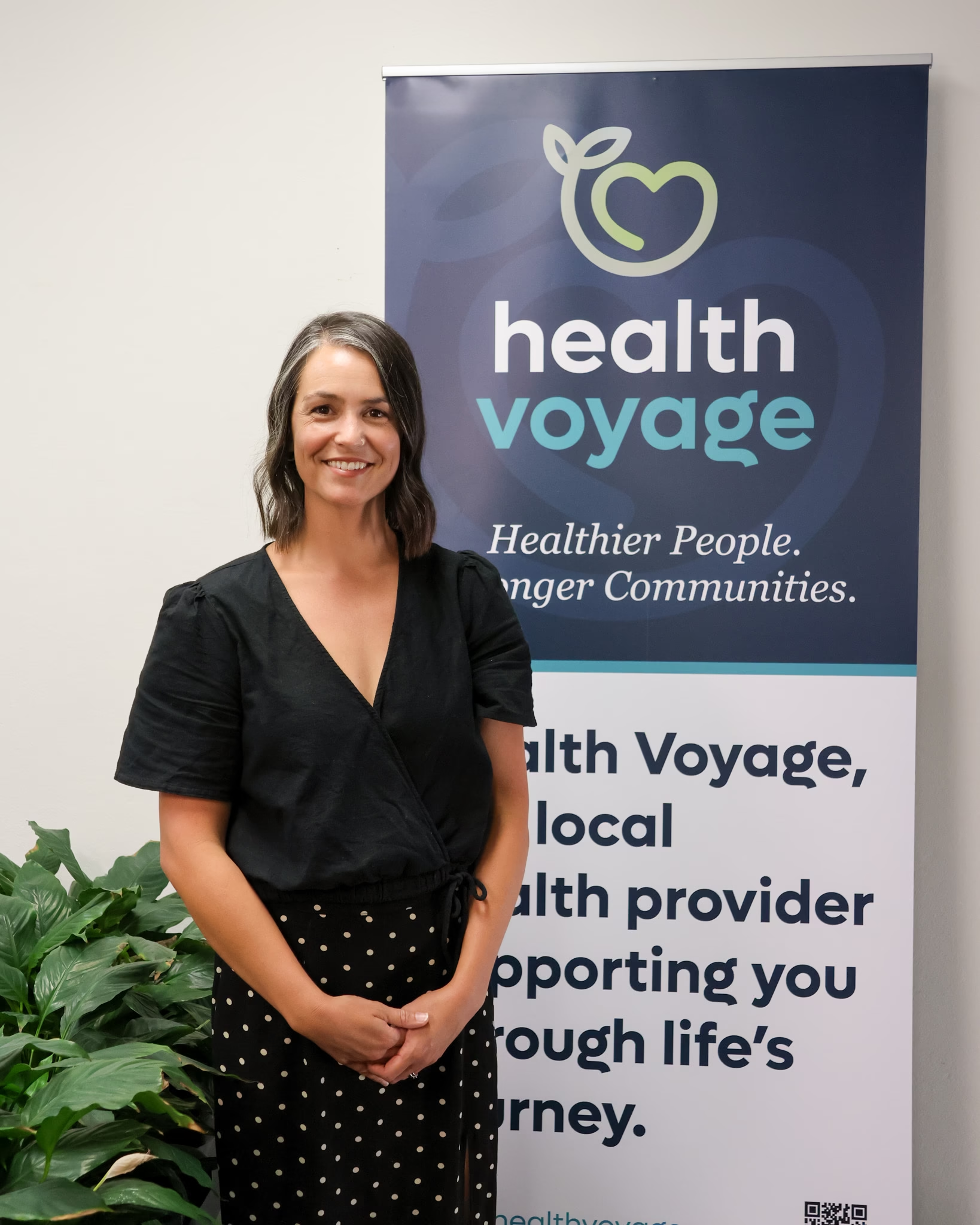
Our HR Manager has been named a national finalist for workplace psychosocial safety, in an award that recognises leaders who create meaningful organisational change, not just good intentions.
There is a particular kind of workplace wellbeing initiative most of us have encountered.
A poster in the tearoom. A resilience workshop. A fruit bowl on a Wednesday.
None of these things are inherently bad. Most are well-intentioned. But on their own, they do not address the factors that most commonly contribute to psychological harm at work: excessive workloads, unclear expectations, poor job design, inadequate support, exposure to trauma, or managers who have never been given the tools to lead people effectively.
The challenge is not recognising that wellbeing matters.
The challenge is identifying the conditions that are creating risk in the first place and having the courage to change them.
That is why we are delighted to share that Meg Smealie, Human Resources Manager at Health Voyage, has been named a finalist for Outstanding Leadership in Psychosocial Safety at the 2026 Psychosocial Safety and Leadership Awards.
Why this award matters
The Psychosocial Safety and Leadership Institute is Australia’s peak body dedicated to advancing psychosocial safety at work, and its 2026 awards framework sets a high standard.
To be considered, organisations and leaders must demonstrate evidence of genuine psychosocial risk assessment, meaningful worker consultation, application of the hierarchy of controls, and monitoring that shows interventions have actually reduced risk and improved outcomes.
Importantly, entries are marked down if they rely primarily on awareness campaigns, resilience training or individual coping strategies without addressing the systems and structures that create risk. Likewise, submissions cannot place responsibility for psychological safety solely on individuals.
In other words, this is not an award for wellbeing activities.
It is an award for recognising psychosocial hazards, making them visible, and changing the conditions of work that influence people’s health and wellbeing.
The category Meg has been nominated for recognises leaders who prioritise prevention over reaction and systemic solutions over individual responsibility.
Why it matters at Health Voyage
At Health Voyage, our teams work in women’s health and youth health. Every day, they sit alongside people experiencing trauma, distress, crisis, uncertainty and recovery.
This work is meaningful and rewarding, but it also carries psychosocial risks.
In a regional community, those risks can be amplified. Staff often live, work and raise their families in the same communities they serve. There is rarely complete anonymity and often no clear dividing line between professional and personal life.
Psychosocial hazards in this environment can include exposure to trauma, emotional demands, moral distress, competing priorities, role complexity, fatigue and workload pressures.
The answer is not asking people to simply become more resilient.
The answer is creating workplaces where people are supported to do difficult work safely and sustainably.
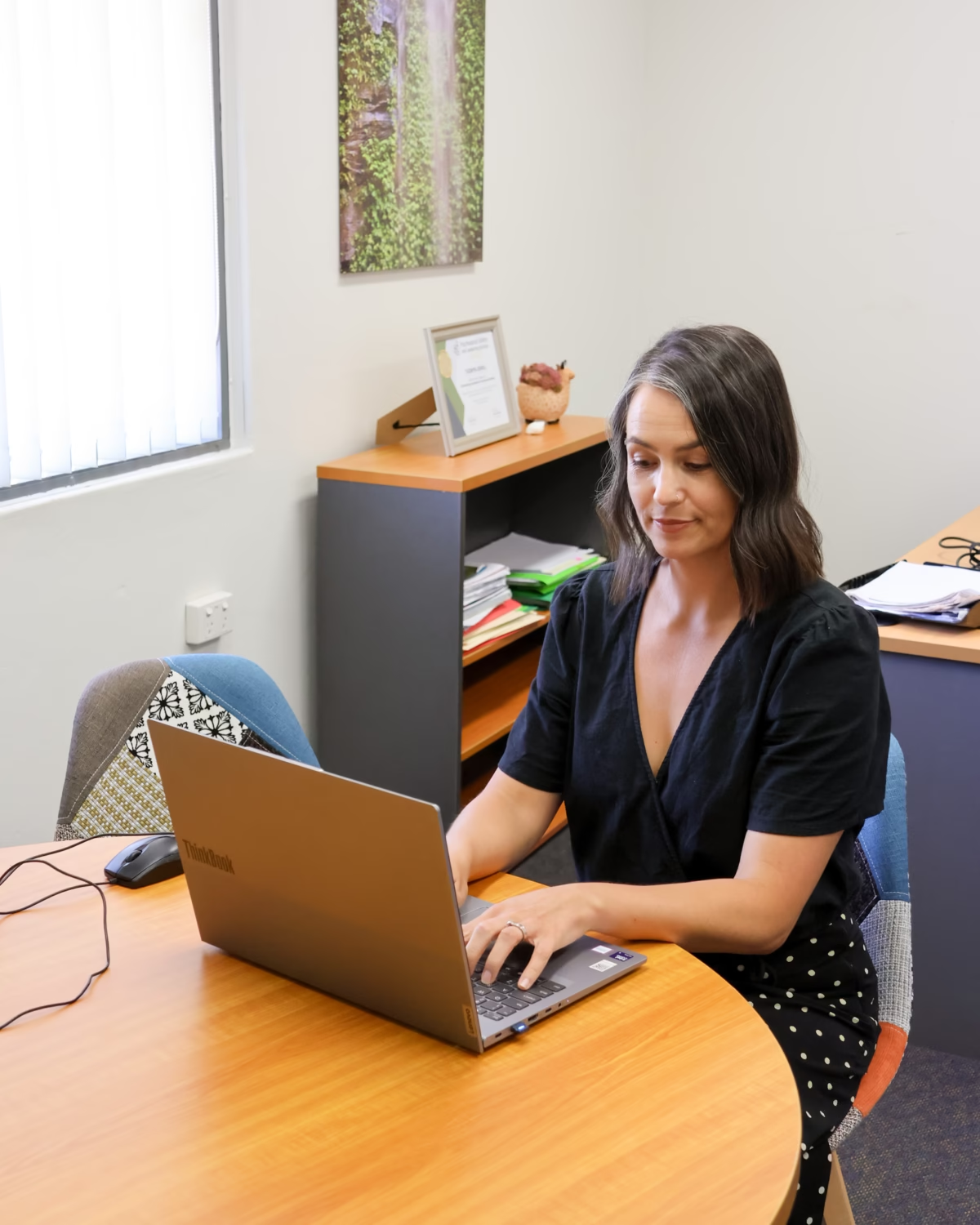
That means quality supervision and reflective practice. It means effective workload design and realistic expectations. It means capable leaders who recognise when people need support. It means flexibility when life becomes difficult. Most importantly, it means creating a culture where someone can say, “I’m not okay this week,” and receive support rather than judgement.
These are the things that make psychosocial safety real.
Making the invisible visible
For more than fifteen years in human resources leadership, Meg has helped bring these issues into the open.
She has helped give language to challenges that many people experience but struggle to describe. She has helped managers understand that psychological wellbeing is not simply an individual concern, but an organisational responsibility. She has worked to ensure that discussions about workload, wellbeing, leadership and support are backed by practical systems and meaningful action.
Her role spans every part of Health Voyage, from supporting the Board, CEO and Executive Leadership Team through to managers and frontline employees.
That perspective matters.
Psychosocial safety is created through the conditions leaders design and the experiences staff have every day. It succeeds or fails in the space between those two groups.
Meg’s work has consistently focused on bridging that gap.
As Meg explains:
“To me, psychosocial safety means creating a workplace where people feel safe to speak up, ask for help and bring their whole selves to work. As leaders, our role is not just to support people when things go wrong, but to use the hierarchy of controls to design work, systems and cultures that prevent harm and help people thrive.”
The thread running through all of it
There is a fitting connection between this recognition and the broader work of Health Voyage.
This year marks the 40th anniversary of the Coffs Harbour Women’s Health Centre, an organisation built on the belief that addressing the broader social, emotional and structural factors affecting people’s lives leads to better outcomes than treating symptoms alone.
The same principle applies to workplaces.
When organisations invest in creating safe, supportive and sustainable working environments, people are better able to thrive, contribute and continue serving their communities.
Psychosocial safety is ultimately about recognising that good outcomes do not happen by accident. They are created by deliberately designing the conditions that make them possible.
That is the work Meg has championed across Health Voyage.
We are proud to see that leadership recognised on a national stage.
The winners will be announced at Twin Towns, Tweed Heads, on Thursday 10 September.
Congratulations, Meg. This recognition is incredibly well deserved. 💜
Date posted:
Last modified: