
Time to read:
Inside headspace Grafton’s Youth Reference Group – a national headspace participation model brought to life at a local level by a team who believes young people should shape the services that serve them.
In a small regional town, everyone knows everyone. That’s what makes asking for help so hard – and it’s exactly what makes the work of Claudia, Community Engagement and Youth Participation Officer at headspace Grafton, so important.
Every headspace centre across Australia enables active opportunities for participation including through a Youth Reference Group – a national model that puts young people at the centre of how services are designed and delivered. But a national framework only comes to life through the people who give it breath at a local level. At headspace Grafton, that’s Claudia, and the remarkable young people she mentors and supports in the Clarence Valley.
Over the past year, those young people haven’t just shaped their local centre. They’ve contributed to national research, co-created a regional mental health campaign, and shown what it looks like when youth voice is taken seriously – not as a token, but as a genuine force for change.
This is their story.
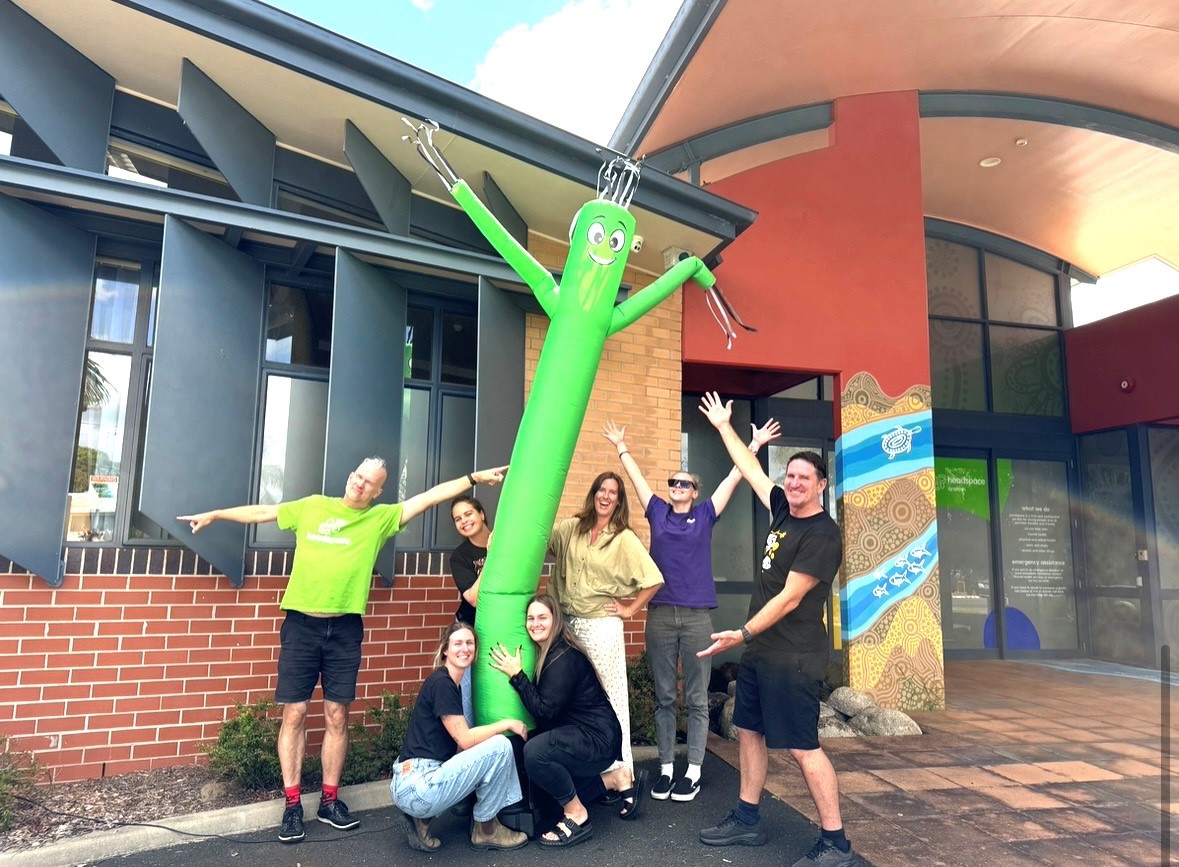
The challenge of showing up in a small town
headspace Grafton has a particular history. It arrived in the Clarence Valley at a time of significant need – and that origin story has never fully left the community’s perception of what the service is.
“People think it’s a crisis centre. That’s still pretty real in the community because we did get headspace here at the peak of a crisis. headspace Grafton has that history that not necessarily other headspace centres have.”
– Claudia, Community Engagement & Youth Participation Officer
The reality is very different. headspace is an early intervention service – a place for any young person who wants to talk, not just those in crisis. But when everyone in your town knows everyone else, walking through those doors alone can feel like an announcement.
So headspace Grafton’s approach has been to bring young people in differently. Targeted small-group sessions. Schools. Community spaces. Anywhere that builds familiarity with headspace before it’s needed most.
“Working in a small group environment gets people more comfortable with potentially coming here and accessing our service. And ideally, even bringing people into the service to do small group sessions here has been very effective.” – Claudia
It’s a quiet strategy. But it’s working.
The Youth Reference Group – young people in the driver’s seat
Across Australia, every headspace centre is entrusted with something important: a Youth Reference Group. The YRG is a key component of the national headspace model – a formal structure that ensures young people aged 12–25 have a genuine voice in how their local centre operates. Each centre, and the team behind it, takes on custodianship of that group – nurturing it, mentoring its members, and making sure it genuinely shapes what happens on the ground.
At headspace Grafton, Youth Reference Group members are involved at all levels of the service – they comment on clinical procedures, service design such as how young people enter the services, how the centre supports the four core streams of the headspace model, co-design physical spaces, name rooms, support interview panels, present to the Board, and shape the feel of the centre itself.
“I just like young people to make use of the service they have. And to get involved a bit more – like this group does. I feel every one of them has learned things in very different ways, but everyone has learned and grown from being part of this group.” – Claudia
Tom is one of those young people. He joined the YRG at 12 – the minimum age – and is now 16. In four years, he has gone from a quiet first member to someone who independently applies for projects, attends meetings on his own, and forms his own views about what young people in the Clarence actually need.
“The headspace Centre now looks a lot different from when I came in first. Just seeing that evolution – seeing headspace be flexible, changing those values, and seeing our feedback in the centre – that’s what I like most.”
– Tom, Youth Reference Group member
Right Care, First Time, Where You Live – a seat at the national table
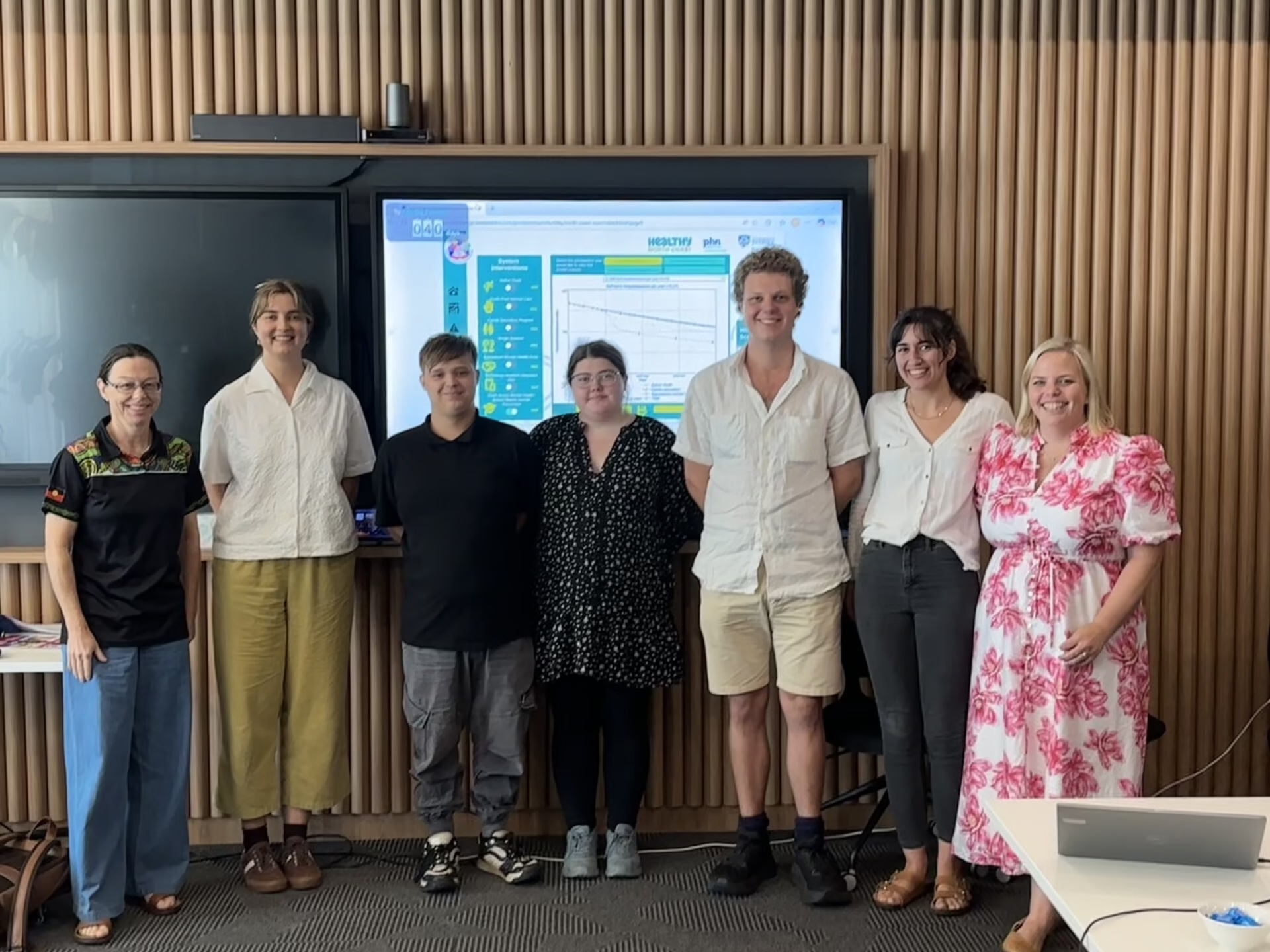
Last year, four YRG members – Britt, Nikki, Lochland and Tom – were invited to participate in something much larger than a local initiative. The University of Sydney’s Brain and Mind Centre, funded by the BHP Foundation, was building a complex economic systems model to help improve how young Australians access mental health services. They called it Right Care, First Time, Where You Live.
Healthy North Coast was one of just five regions chosen across Australia. And they invited young people from across the region to help shape the model – from Bellingen to Mullumbimby. headspace Grafton brought four of the thirty-plus young people who participated.
The workshops were intensive – five hours each, across three sessions in Coffs Harbour. Young people sat alongside senior leaders, clinicians, economists and researchers to map out the barriers to help-seeking and rank the interventions that could make the biggest difference. In-school programs. Early intervention models. Access in regional areas. Their lived experience became data.
“It started off with just identifying the mental health path right now for youth who are struggling – to actually get to the point of seeking help. And everyone was chipping in and you saw all the lines going everywhere. It was pretty confusing. But that was a good starting base to say: okay, this needs improvement.” – Tom
The outcome is an interactive simulation model – now held by Healthy North Coast and used for advocacy. Users can pair different interventions and see how they would affect mental health outcomes in the region. It’s not simple. But it puts evidence in the hands of the people trying to make the case for better services.
At the final workshop, Tom was asked to open the day with a lived experience speech. And then, at the end – unprepared – to summarise the whole day for the room. He did both.
The batyr campaign – when young people write the story themselves
More recently, Tom and the YRG co-created something you can watch right now.
The batyr x Healthy North Coast campaign is a video designed to challenge mental health stigma – and it was built from the ground up by young people in the Clarence/ Northern Rivers, across five to six collaborative workshops with the team at batyr.
The concept was entirely theirs. What started as an open brief – create something to address stigma – became an intergenerational interview format, designed to show how attitudes to mental health have shifted across generations. Tom, two other young people, a parent, and two older women sat down in pairs for two-hour filmed conversations in a professional studio in Tweed Heads. The result is an eight-minute video – honest, warm, and genuinely moving.
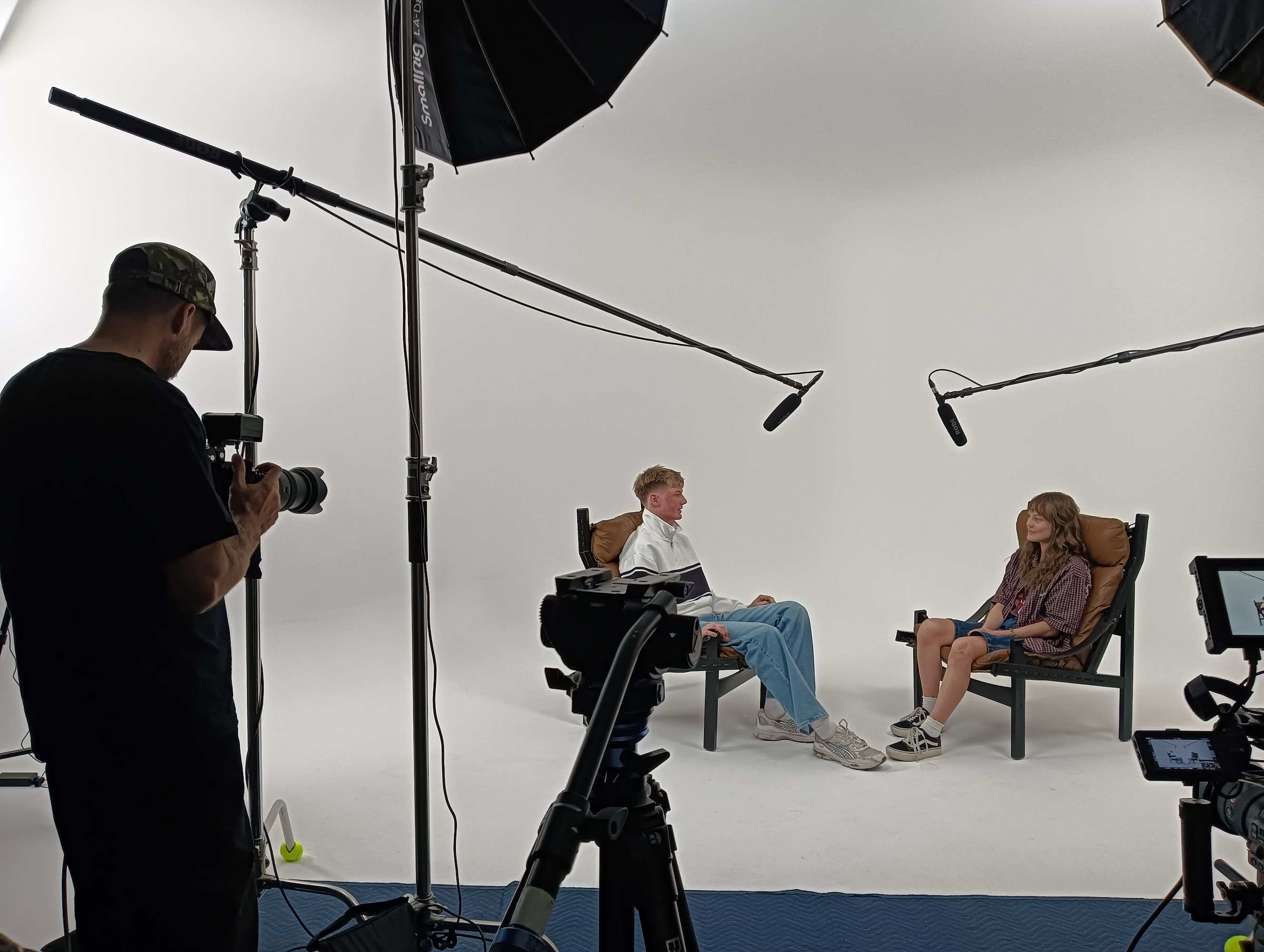
“We focused on stigma being the most prevalent thing affecting mental health. And the intergenerational concept – that was what the young people came up with. To see how that stigma changes throughout the generations.” – Tom
Tom was the only one from the planning group who also appeared on camera. The campaign took courage – and not everyone was ready to take that step. But Tom was.
“Tom was certainly nervous going into it. It’s presented as a chilled chat to start with – but it’s still a bit different having cameras in front of you.” – Claudia
The campaign is now live – on YouTube in full, with clips rolling out on TikTok and Instagram, and promotion planned in schools across the region. The response has been immediate and positive. Tom’s own peers have already reached out.
“I’ve looked at some of the comments on the video and it’s all been very positive. And within the community – my own peers have also seen the video.” – Tom
Watch the batyr x Healthy North Coast campaign.
What they want you to know
We asked both Claudia and Tom what they wish more young people in the Clarence understood about headspace – and the answer was consistent.
“It’s not a crisis centre. It’s more focusing on early intervention. You’re never going to get judged here. Come for the smallest of things.” – Tom
“Young people face a lot of pressures these days and so many mixed messages. It should just be accepted for people to come and have a chat with someone if they need to. It is free. It doesn’t cost anything. And they can come in a confidential way.” – Claudia
Tom also flagged something beyond the clinical services – the social connection side of headspace Grafton that often goes unnoticed. The groups, the cooking club. The Youth Reference Group itself.
“Having that strong social connection is also a good preventative measure. So having that strong connection – that may not specifically seem like something for your mental health – is really valuable too.” – Tom
Get involved
The Youth Reference Group is the national headspace model – and at headspace Grafton, the group is open to young people aged 12–25 from across the Clarence Valley. The group recruits annually at the start of each year, but passionate young people are always welcome – even mid-year.
Whether you’re interested in mental health advocacy, want to study psychology or social science and are looking for hands-on experience, or simply want to be part of something meaningful in your community – the YRG has a place for you. And if you’re not sure, come and find out what it’s about. That’s exactly how Tom started.
Reach out to headspace Grafton to find out more:
- 📍 59 Duke Street, Grafton NSW 2460
- 📞 02 6642 1520
- 🌐 headspace.org.au/headspace-centres/grafton
headspace Grafton is delivered locally by Health Voyage and is part of the national headspace network. headspace Coffs Harbour is funded by Healthy North Coast through the North Coast PHN Program.
Date posted:
Last modified: